
Essay Outside The World
Level One
What a 47-year-old solo dev learns the hard way.
I’ve always wanted to make a video game, and I’m pretty envious of people who have the know-how. Come to think of it, I’m envious of any kind of artistic know-how. When I was really young, I remember being incredibly jealous of my oldest brother, Adam, who had a knack for sketching and drawing. One in particular burned itself into my memory: a picture of a helicopter hanging on his wall just above the doorway. I’m not sure if he knew, but I would sneak downstairs often to stare at all of his creations.
But for me, when it came to drawing, I fell short. I knew I had other skills, maybe just as valuable. They just weren’t the ones I wanted.
“Knack.” I really do love that word. It has always felt unusually precise to me.
In Orson Scott Card’s fantasy series The Tales of Alvin Maker, characters have “knacks". These are minor, involuntary magical abilities that allow them to perform specific tasks with near-perfect precision. That is how I feel about people who sing, draw, or dance well. It seems like magic to me when someone dreams up something within their mind and translates it through their hands, feet, or voice.
I’ve watched people doodle mindlessly, their attention otherwise occupied. There seems to be no disconnect between the firing of synapses in their brain and the movement of their hands across the paper. It is staggeringly beautiful.
I’ve never quite lost the desire to draw. And that missing skill set bit me in the ass these past few weeks. Because if I knew how to draw, maybe I would have had an easier time with the project I'm about to describe.
Over the past couple of months, I used some of my spare time to sit down and plan a video game.
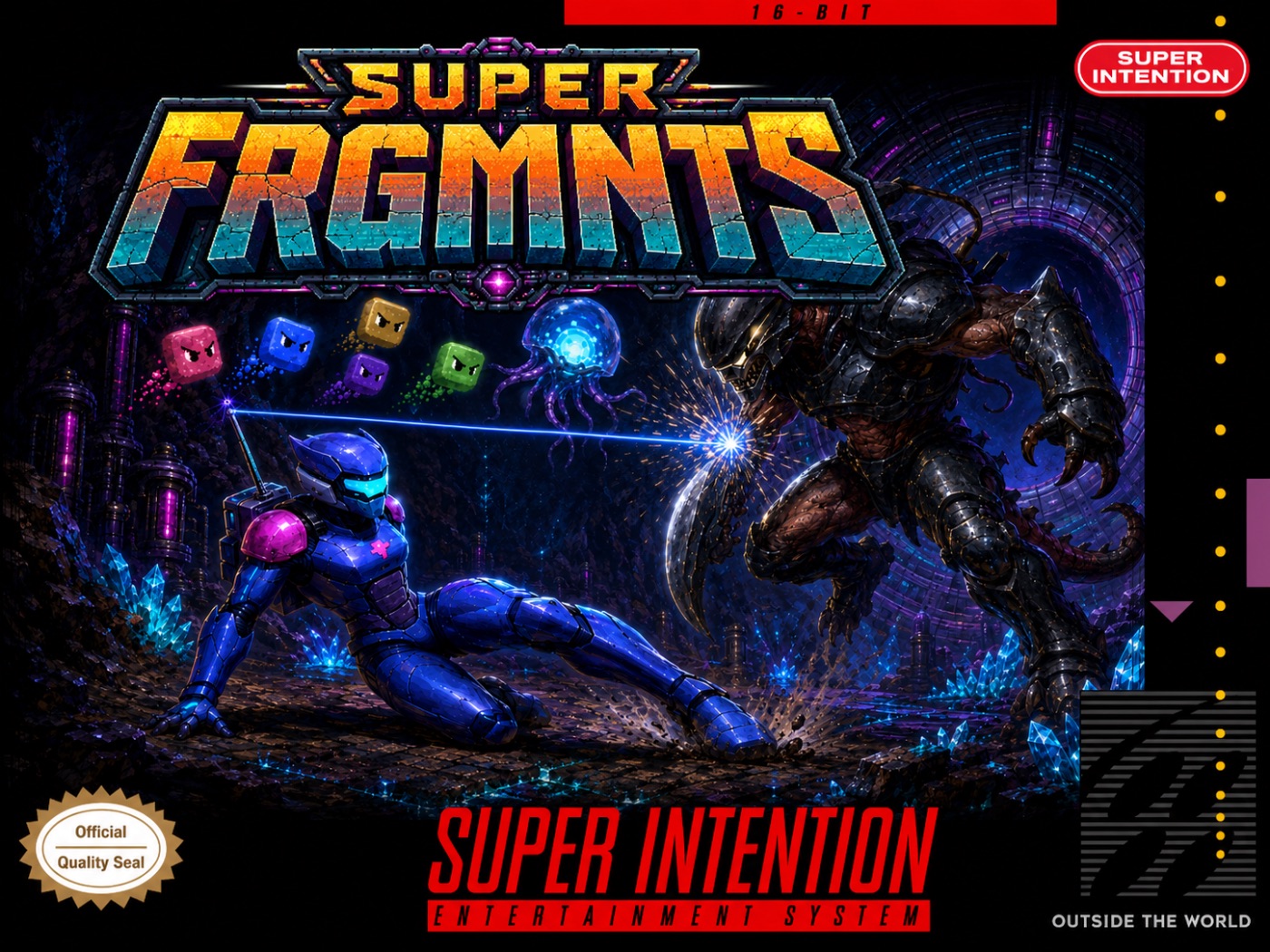
I described it elsewhere as a kind of “love letter” to my past. I wanted to take the best aspects of the games I loved as a kid...Super Mario Bros., The Legend of Zelda, Super Metroid, and others, and make something that might be enjoyed by people my age.
The proof of concept came quickly. It was so much fun! But I ran into hard limits with a browser based game. I started encountering frame-rate and memory problems. Frustrated, I asked Codex point-blank:
“Should I just make a native iOS game instead? That was my ultimate goal.”
Codex responded:
“Oh yes, you should make an iOS game instead.”
So I abandoned the browser prototype and began rebuilding the game natively for iOS.
Spoiler: It went so, so poorly.
Life being what it is, I am a 47-year-old without a full development team beside me.
As I dove into iOS game development, I failed to respect the sheer scope of it all. A video game is not just software. It is an overwhelming orchestra of disciplines.
A studio distributes the work among systems designers, programmers, artists, animators, audio engineers, writers, and testers. I've learned that those disciplines act as a system of checks and balances. One person’s exciting idea becomes another person’s warning about physics, memory, scope, or time.
And it's important to note that I did not have anyone pushing back on my ideas. No one questioning my judgement, or my assumptions. I only had the confirmation bias in my own head.
So when I say that I was acting as a one-man band, not only did it mean playing every instrument at once, it meant playing them all wrong. With earplugs in.
Every apparent breakthrough uncovered a different and unforeseen problem. I would fix one behavior only to destabilize another. Something that looked perfect in isolation could break animation, collision, camera movement, performance, or some other system I had not realized was connected to it.

Each night, the game became technically more elaborate and somehow less playable.
What makes this difficult to admit is that I wasn’t a novice blindly handing the reins to a machine. I already built and successfully launched (and maintain!) a social-media platform on iOS. And besides, I had a background in web development, coding, and hardware. I thought I knew enough to call BS when the AI became sloppy.
With my social media app, I regularly caught its hallucinations, challenged its bad logic, and pushed back when its enthusiasm got out of hand. But that prior success bred a quiet hubris when it came to the game.
I badly misjudged my own general software competence for game-development acumen. Because I could audit line-by-line code changes, I thought I could be in command. I did not appreciate that building a game involved much more than writing software. It required maintaining a delicate, real-time balance among spatial math, frame budgets, physics loops, animation systems, and asset pipelines.
My technical background gave me just enough guardrails to feel safe while the AI coddled me right off the cliff.
Sitting in the wreckage of the native iOS attempt, I finally had a realization: I needed to make like Elsa and let it go.
I was going to end up spending hundreds of dollars and dozens more hours making an increasingly elaborate piece of garbage. That realization felt like waking up.
So, I said goodbye to the native iOS build. I was incredibly sad. But in a very real way, I was also relieved. I had been banging my head against a wall, convinced that I was just two steps away from a breakthrough. But my head was already split open, and I didn't realize it.
The next morning, I spent my 45-minute commute to work in relative silence. No music, no audiobooks, no podcasts. Just me and my thoughts, which somehow, kept returning to the game. To the failure. Somewhere along the drive, I remembered my first effort. The one that worked, inside the web browser.

I could return to that, polish it up, and show it to you. I just needed to make that one solid, atmospheric experience. So when I did return to that version later that night, and began polishing it, something incredible happened.
I discovered that while I might lack the ability to sketch something beautifully with my hands, I have my own knack. I can build a pretty cool world. I have a knack for creating believable characters and giving a place a true sense of mood. And I enjoy the process of doing it.
I knew what the planet should feel like before I knew how to build every part of it. I knew how my two main characters should speak to one another. As I wrote their dialogue, the story began unfolding naturally. The world developed a personality that I genuinely loved.

The writing wasn’t filler between pieces of gameplay, it became the story and drive of the game.

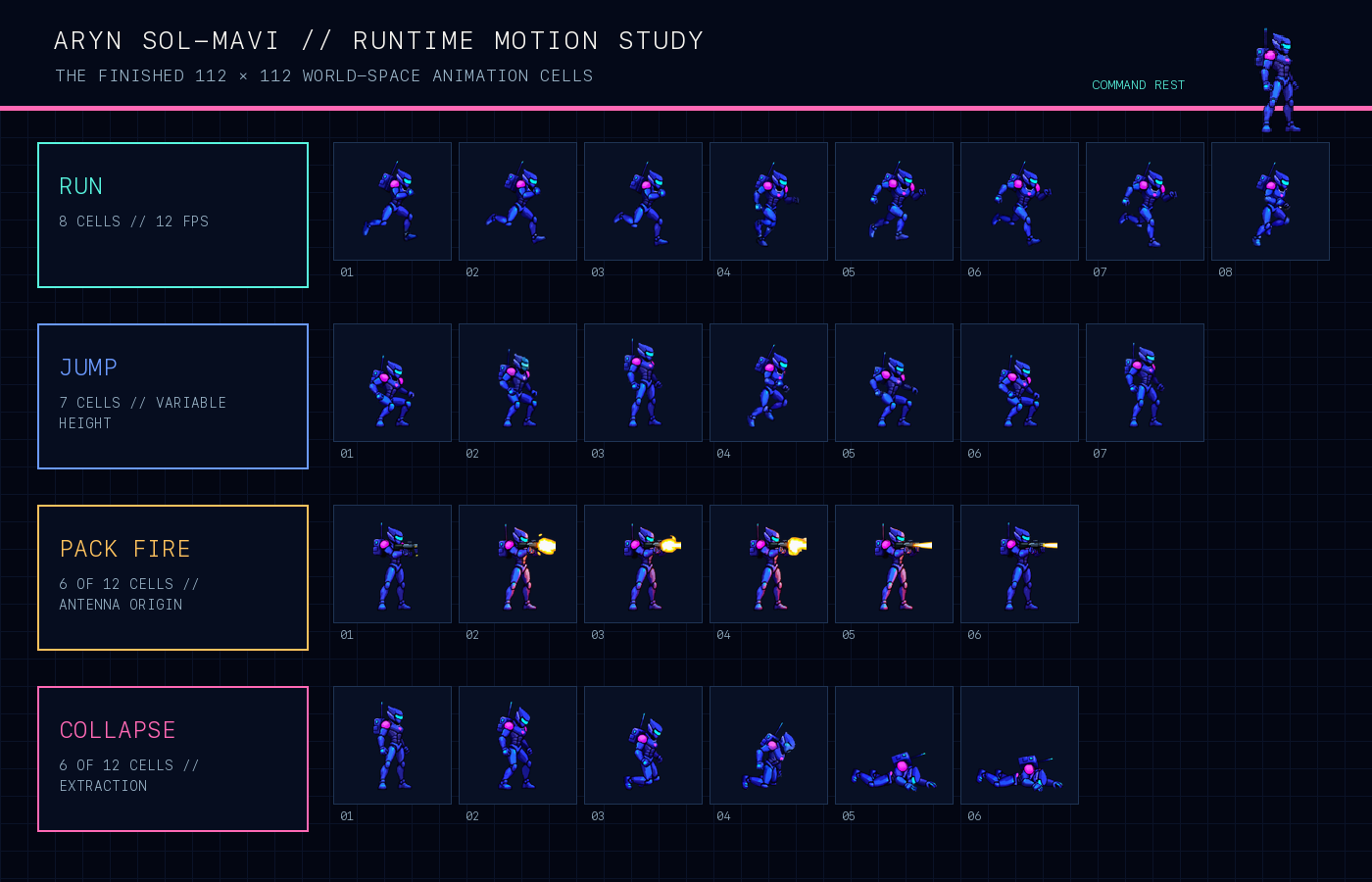
So here it is: the finished browser prototype. I cleaned up the code, tuned the controls, polished the sprites, and tried to let the narrative shine.
And you know what? It kind of kicks ass. I am proud of what I built. And I am happy to show it to you.

It was a labor of love, crafted line by line and bug by bug, with a bit of AI muscle helping me cross technical gaps I could not have crossed alone. And I will not be expanding it into a full release. I now know my limitations and what my time is worth.
Level One is complete, self-contained, and fully functional. It runs right now, directly in your web browser. Chrome is recommended. Controllers are supported! But you can also just play it on your phone with touch controls. No App Store download is required.
Just a smol, playable piece of a world I brought to life.