

Essay Outside The World
The Lights That Melted the Snow
Old incandescent C9s, the cold light of modern LEDs, and the Christmas magic I'm not ready to let fade.
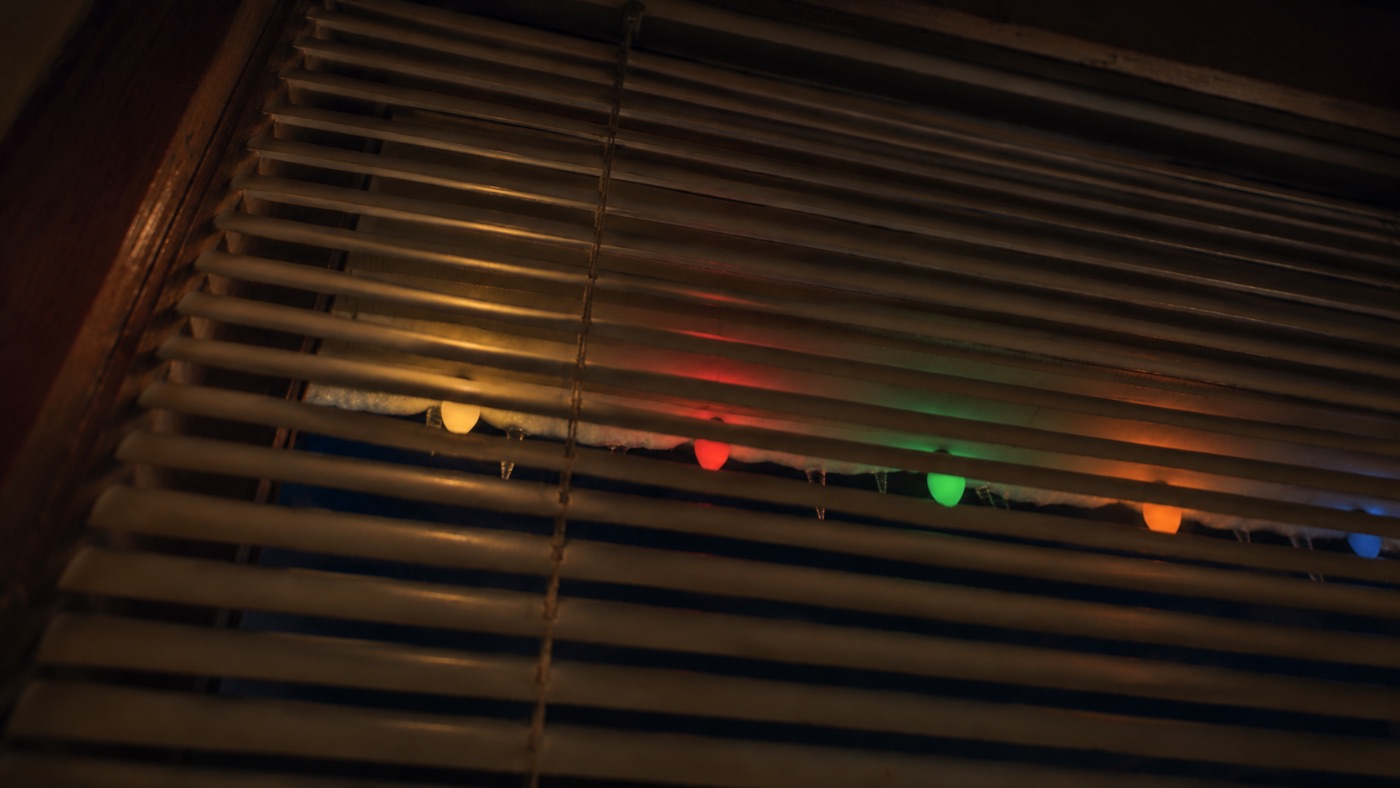
The world is full of wonder, when you are a child. The ordinary in life can be transformative, and the superlative? Well...let's just say that is how and where core memories are created.
I have a memory as a child, lying on the top of my twin bunk bed. Now, mind you...this is not one distinct memory that I can tie down to one certain date in the past. Rather, it is an amalgamation of the overall feeling I remember. Anyway. What I remember is this:
Christmas lights.
And very, very specific lights, mind you. The incandescent, painted, multi-color C9 bulbs. That was what my dad hung on our house in Bountiful, Utah, when I was very little. And those C9s glowed. They looked absolutely magical as I peered up through that window, looking up at the eaves of my house as the snow would fall and ice formed. The incandescent warmth from the bulbs melted the ice and snow, leaving semicircular patterns around the places where they were hung.
They were always neat, tidy, and straight. They burned out quite often, but my dad had an entire box of spares always ready to go. He would let me help (I would stand by the ladder) as he climbed up and fixed whichever bulbs were finished. These lights, they fitted the house just right. The black roof, the red brick, the white trimming around our windows...I know nothing else would have done the holiday season any justice.
Then, we moved to Arizona. Not only did I lose the Christmas snow, but my dear mother also insisted that my father install icicle lights on the house, instead of my beloved C9s. Yes yes...they were pretty enough, and thank God they were actually incandescent (this being the early 90s, LEDs were still not an option). But they were plain white, and they were yet another reminder to my young brain that nothing is forever, youth is fleeting, and I was certainly not yet in charge of my own destiny.
These days, it's all LEDs, inflatables, and smart lights. Normally? I have no problem with any of them. Hell, my entire house is full of Philips Hue LED bulbs, Govee smart lights, and other types of modern fixtures. But the mass-market LED bulbs that manufacturers pass as holiday lights are nothing more than a pale imitation of what we had when we were young.
I should mention that, just as James May often says, not everything was good back in the "good old days". Quite the contrary; a lot of it was crap. Those C9s my dad used? They were fragile, fickle, and tragically power-hungry. You also could not string more than 2 or 3 sets together without blowing a fuse or lighting the house on fire. So naturally, these mass-market LED strands took off! They were durable. They cost pennies to run. And you could connect 2 dozen strands together without a hitch.
But the problem with these lights, at least to me, is their presentation. They lack everything that the old incandescent lights excelled at. Light manufacturers have spent decades making LEDs cheaper, brighter, and more efficient, without necessarily making them pleasant to look at.
It would also help to know a little about how those old bulbs worked in the first place.
Christmas lights have been around since the late 1800s, and the familiar C9 bulbs made their appearance in the late 1920s. GE introduced them for outdoor decorating, with larger bulbs that could withstand the elements and be seen from the street. The basic technology, though, was simple. Electricity passed through a tiny metal filament, heating it until it glowed. Surround that with a colored bulb, and boom: you had a Christmas light. The result was a soft, rich color that radiated from the entire bulb.
When LED Christmas lights began arriving in stores, manufacturers largely abandoned that approach. Instead of producing warm light and filtering it through colored glass, they used tiny components that emitted (the E in LED!) the desired color directly. Blue was blue. Green was green.
And while this was efficient, the resulting colors were often incredibly harsh and saturated. Instead of a warm, glowing bulb, you got a tiny, intensely bright point of light, frequently housed in a cheap plastic shell.
Sigh...and then, there's the flickering. Which is the worst part, at least in my addled mind.
Incandescent bulbs have the advantage. Their filaments stay hot, even as the electricity flowing through them fluctuates. They don't instantly stop glowing every time the electrical current changes. LEDs, on the other hand, react almost immediately. Without decent electronics to smooth out the power, they can flicker rapidly, sometimes enough to create a distracting strobing effect when you move your eyes. (Tell me you haven't seen this before...)
And because better electronics cost more money, guess which approach tends to win when manufacturers are trying to sell a thousand Christmas lights for twenty bucks?
The frustrating thing is that none of this is an inherent problem with LEDs. They can produce beautiful, warm, nearly flicker-free light. But doing so requires manufacturers to care about more than cost, brightness, and efficiency.
Somewhere along the way, we figured out how to make Christmas lights that were better at almost everything, except actually looking like Christmas lights.
So, I've gone on strike the past couple of years. I would buy strands of incandescent mini lights, which are still mass-produced and cheap to buy. The problem is that last year's purchase didn't make it to 2026, and I will be damned if I am coerced into another Target run to buy $20 worth of garbage incandescent lights. (They just don't make them like they used to...wait...I seem to be subverting James May's adage.)
I've even considered permanent holiday lighting, which, admittedly, looks pretty damn good. Professional installations still cost thousands of dollars, unfortunately...and my willingness to self-install a set of Costco/Govee permanent outdoor lights wanes as I get older. I am too much of a perfectionist when it comes to lighting to do this myself. They have to be even, they have to be hidden, and they have to stand the test of time.
Another memory comes to mind. And this one is remarkably less cheery than the seven-year-old human staring up at the warm incandescent C9s. It is the memory of when my mom started losing interest in decorating for Christmas. I was the only one left at home, and I was the typical grumpy teen, so it was only natural that my mom lost a bit of interest in the magic and whimsy of the holiday season.
So that brings me to the crux of this essay...I simply cannot let the slow slide of holiday apathy begin in earnest. There are still children at home. And these small humans are the most excitable and most holiday-loving creatures in my life. Therefore, I publicly commit here and now to the hanging up of lights this year. And while they will undoubtedly not be the C9s of my youth, they will be the closest imitation I can find for now.
And in the future? Who knows. Maybe I'll finally spend the money on a set of Tru-Tone C9 Dura-Bulbs, which look remarkably close to the old incandescents, but without the fragile glass or obscene power consumption. They're expensive, sure. But at this point, how much money have I wasted buying cheap lights that barely survive a single Christmas?
Or maybe I'll bite the bullet and have permanent lighting professionally installed. It's not as though I'm opposed to smart lighting. My outdoor lighting is already replete with Philips Hue bollards and spotlights, and I absolutely love them. So, never say never. Perhaps there's a future where I can have my perfectly arranged, permanently installed lights and the nostalgic Christmas glow I've been chasing.
But whatever I decide, the quest for that warmth hanging from the eaves of my house remains.
I guess I'm just that seven-year-old kid, still looking out of my window, hoping to see something magical glowing on the other side.